If you’re trying to grow on Instagram, you’ve probably asked yourself this question more than once:
Should I focus on Stories or Feed posts?
The short answer? You need both.
But the real value comes from understanding how each one works,and when to use them strategically.
In this guide, you’ll learn the key differences between Instagram Stories and Feed posts, when to use each, and how to combine them for better engagement and growth.
What Is Instagram Feed?
Your Instagram Feed is your profile’s main grid,the place where your content lives permanently (unless you delete it).
Key Features of Instagram Feed
- Posts stay on your profile long-term
- Includes photos, carousels, and videos
- Can appear in Explore and hashtags
- Supports captions, tags, and SEO-style keywords
Pros of Using Feed Posts
- Long-term visibility
Feed posts don’t disappear. A well-performing post can bring traffic for weeks—or even months. - Discoverability
Instagram’s algorithm pushes Feed content to new audiences via Explore and search. - Brand identity
Your Feed is like your storefront. It shows who you are and what you offer at a glance. - Higher reach potential
Compared to Stories, Feed posts have a better chance of reaching non-followers.
Limitations of Feed Content
- Requires more planning and design
- Less spontaneous
- Engagement is slower (people don’t always interact immediately)
What Are Instagram Stories?
Instagram Stories are short, temporary posts that disappear after 24 hours.
They appear at the top of the app and are usually seen by your existing followers.
Key Features of Instagram Stories
- 24-hour lifespan
- Interactive tools (polls, questions, quizzes, sliders)
- Casual, behind-the-scenes format
- Direct communication via DMs
Benefits of Using Stories
- Strong engagement
Stories are designed for interaction. Features like polls and Q&A make it easy to connect with your audience. - Authentic connection
Stories feel real and unpolished—which builds trust. - Daily visibility
Posting Stories keeps you at the top of your followers’ screens. - Instant feedback
You can quickly test ideas and see what your audience likes.
Limitations of Stories
- Content disappears after 24 hours
- Limited reach to new audiences
- Not ideal for evergreen content
Instagram Stories vs Feed: Key Differences
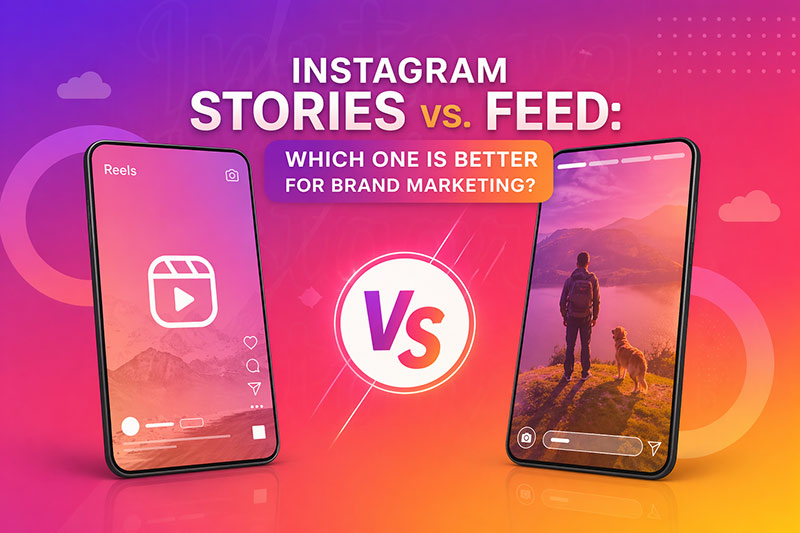
Instagram Stories and Feed posts differ mainly in visibility and interaction style. Feed content is permanent and helps with long-term growth and discovery, while Stories disappear after 24 hours and focus on quick, casual engagement.
Feed is better for reaching new audiences and building a lasting presence, whereas Stories are ideal for creating daily interaction and stronger connections with your existing followers.
When Should You Use Instagram Feed?
Instagram Feed is best used when you want to create content that delivers long-term value and represents your brand in a clear, professional way. It helps you reach new audiences while building a strong and consistent presence on your profile.
Best situations for Feed:
- Sharing valuable tips or educational content
- Posting high-quality product images
- Creating carousel posts (step-by-step guides)
- Building your brand identity
- Targeting new audiences
Example:
If you’re selling kids’ educational toys, a Feed post could be:
👉 “5 Ways This Puzzle Boosts Your Child’s Brain”
That kind of content can keep attracting users over time.
When Should You Use Instagram Stories?
Instagram Stories are best used when you want to share quick, real-time content and stay consistently visible to your audience. They help you build a more personal connection through daily interactions and casual communication.
Best situations for Stories:
- Asking questions or running polls
- Showing behind-the-scenes content
- Sharing quick updates
- Promoting new posts
- Creating urgency (limited offers, reminders)
Example:
👉 “Which toy should I review next?” (Poll)
👉 “New product just arrived!” (Quick video)
Stories make your audience feel involved.
Instagram Stories vs Feed: Which Is Better for Business?
When it comes to business, choosing between Instagram Stories and Feed isn’t about picking one over the other,it’s about understanding their roles. Each serves a different purpose in your marketing strategy, and using them together creates better results.
For example, a toy store might post a high-quality product photo or a helpful carousel on the Feed to attract new customers, then use Stories to show how the toy works, ask parents for their opinion, or share real customer feedback.
Use Feed for:
- Growth
- Visibility
- Authority
Use Stories for:
- Trust
- Engagement
- Retention
A business that only posts Feed content may grow—but feel distant.
A business that only posts Stories may connect—but not grow.
The real power comes from combining both.
How to Combine Stories and Feed for Maximum Growth
To grow effectively on Instagram, you shouldn’t treat Stories and Feed as separate tools—they work best when used together as part of one clear strategy. By combining the long-term impact of Feed with the daily engagement of Stories, you can attract new followers while keeping your current audience active and connected.
Step 1: Post valuable content on Feed
Start by creating a strong, high-quality post that provides value, such as tips, tutorials, or product insights, so it can attract and stay useful for a wider audience over time.
Step 2: Promote it through Stories
Share your Feed post in Stories and add a simple call-to-action to guide your audience to view, like, or comment on it.
Step 3: Start conversations in Stories
Use interactive tools like polls or questions to encourage your audience to engage and share their opinions related to your Feed content.
Step 4: Stay consistent with Stories
Even on days you don’t post on Feed, use Stories to stay visible and maintain regular communication with your audience.
Final Thoughts
Instagram Stories and Feed posts serve different purposes,but together, they create a powerful strategy.
- Feed builds your presence and reach
- Stories build your relationship and trust
If you want real growth in 2026, don’t choose between them.
Learn how to use both,intentionally and consistently.
Because on Instagram, success isn’t about posting more.
It’s about posting smarter.